
The power is back, the house is 88 degrees, and every household in Mobile asks the same question: is it safe to turn the air conditioner on? If the outdoor unit moved, got wet above its base, is packed with debris, or the attic leaked, the answer is not yet. A post-hurricane HVAC inspection from a licensed technician finds the damage before the first start turns it into a compressor.
Call (251) 680-7500 Request Storm ServiceYou can do this from the yard and the hallway. If any item is a yes, leave the system off and call.
If you see downed lines, smell burning or hear buzzing, stay away, keep people and pets clear, and call 911 or the power company first. Then call us.
Call (251) 680-7500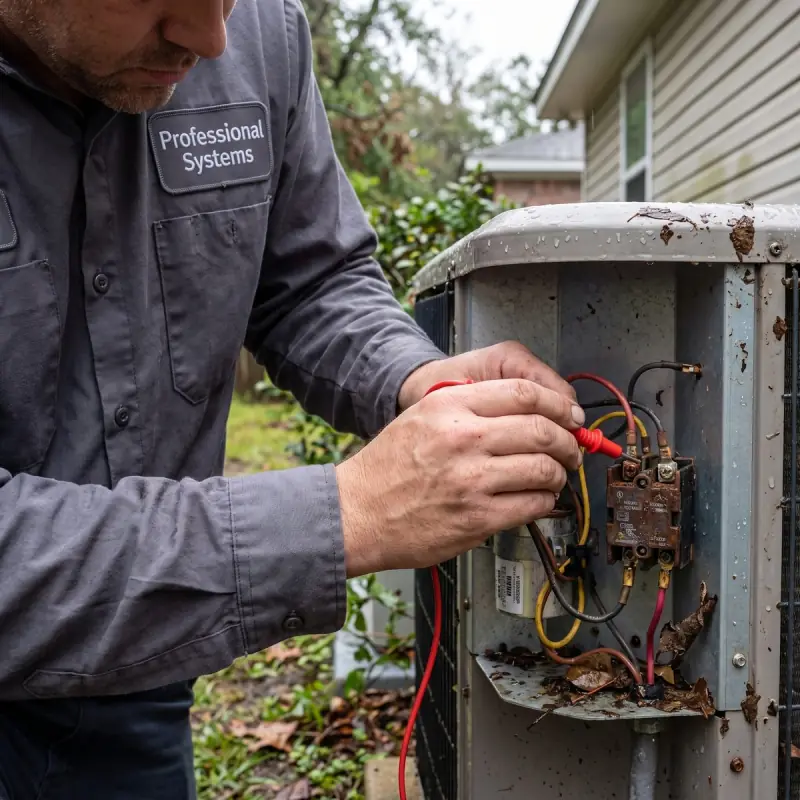
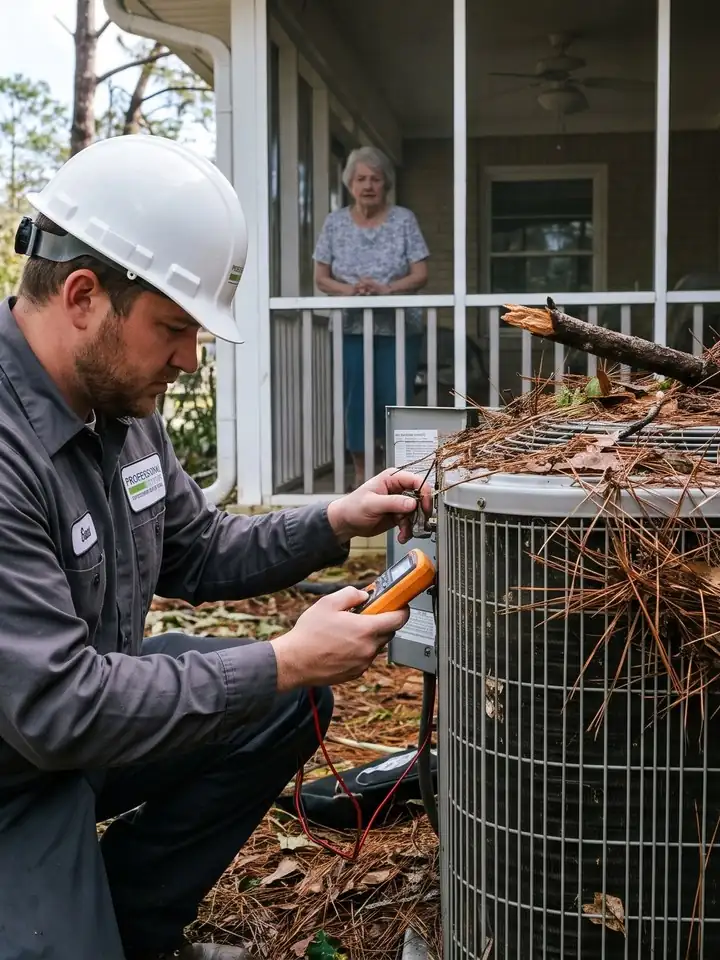
Position and level on the pad, debris cleared, fins inspected and combed, coil checked for punctures and leaks, fan blade and motor checked for damage.
Contactor, capacitor, wiring, the disconnect and the whip, tested with a meter after any water exposure. Wet contactors and capacitors are replaced, not dried.
Pressures, superheat and subcooling, the line set checked for kinks and rubs where the unit shifted, insulation replaced where it tore.
The control board, blower motor and capacitor, the coil and drain pan, wet insulation and filters, and any water in the cabinet from a roof leak.
Debris and water in the drain line, the float switch tested, because the first humid week after a storm is when a clogged drain floods a ceiling.
Ducts checked for water, crushed runs and separated joints; the thermostat and low-voltage circuit tested; surge protection recommended at the condenser and the panel.
What happened to the outdoor unit, whether the roof leaked, and whether the system has run since the storm. A photo helps.
A licensed technician tests the system component by component with the power off first, then under a controlled start. Most take 60 to 90 minutes.
What is safe, what needs repair, and the price, with photos. If nothing is wrong we say so and turn it on with you.
Common parts are on the truck. Anything bigger is quoted side by side with replacement, and documented for your insurer.
A post-hurricane inspection takes about an hour and keeps a wet contactor or a tipped unit from becoming a compressor.
Most Mobile homes keep the air handler in the attic, directly under the roof decking that lost shingles. Water that found its way in during the storm lands on the cabinet, soaks the insulation around the coil, drips into the blower compartment and sits in the secondary drain pan. Run the system like that and it pushes wet, musty air through every duct in the house and shorts the board in the cabinet.
The attic is where a post-hurricane inspection earns its price: wet insulation pulled and replaced, the cabinet dried, the board and the blower motor tested, the drain cleared and the float switch confirmed. If the roof is still open we tell you what to tarp before the next rain, and we come back once the roofer is done.
The post-hurricane inspection is quoted up front, with no surprise fees and no storm surcharge. If a repair is needed you get a written price before any part is replaced, and the inspection fee is applied to the repair when we do the work. Maintenance-plan customers are seen first after a storm and get the inspection as part of their plan visit; ask about joining when you call.
During an active event the notice bar at the top of this site shows the current response time, and a person answers the phone nights and weekends. If the system failed outright, our emergency AC repair team runs the same checks on the way to the repair.
"A storm came through and messed up the electric in our house. We got a quote quickly and they got us up and running fast! The guys did a great job and even helped us save money."
— Devan H., Google review"Came home late afternoon to find my power off. I called after hours and Robby was over in 15 min. It was a bad circuit breaker. From the time I saw I had no power til the time I had power back on was around 30 min. Amazing. Super nice guys as well."
— Gary S., Google review"They diagnosed a power issue that other companies weren't able to. The technician was extremely knowledgeable and professional, and explained everything very well. Also, I called them at 8 at night and got a human being on the phone!"
— Laura B., Google reviewIf the outdoor unit did not move, is clear of debris and dry above its base, the attic did not leak and nothing smells or hums, it is usually fine to run. If any of those is not true, leave it off and have it inspected first; the first start is when the damage gets expensive.
Most often a tripped breaker or low-voltage fuse, a surge-damaged control board, a failed capacitor, or a contactor that sat in water. Occasionally the float switch did its job because the drain flooded. All of it is found in the inspection.
Sixty to ninety minutes for a typical split system, longer if the attic unit took water or there are multiple systems.
Yes. A coil packed with pine straw cannot reject heat, so the compressor runs hot and short-cycles, and crushed fins do the same. Cleaning the coil and combing the fins is routine on the first visit after a storm.
Older systems benefit from having the crankcase heater energized for several hours before the compressor starts, which is why we recommend turning the breaker on and the thermostat off first. The inspection handles the rest.
The inspection itself usually is not, but the damage it documents may be. We write the findings and the repair estimate so your adjuster can read them. We cannot promise what a policy covers.
Something we didn't cover? See our full FAQ page or call (251) 680-7500.
Electrical, HVAC and generator repair after a storm, from one Mobile crew.
Storm damage hubTipped condensers, crushed fins, broken lines and surge-fried boards repaired or replaced.
Storm AC repairDiagnosis and repair for every brand on the Gulf Coast, plus maintenance plans.
AC repairRepair, replacement and maintenance from Mobile's HVAC division.
AC servicesA licensed post-hurricane HVAC inspection with written findings, quoted up front, from the Mobile technicians who have worked every Gulf Coast storm for 25 years.
Call (251) 680-7500 Request Storm Service