
Condenser blown over by the wind, fins crushed by a limb, a refrigerant line snapped, the unit sitting in water, or the control board fried by the surge when power came back. Our HVAC technicians repair storm-damaged air conditioners across Mobile and Baldwin County, and tell you honestly when the unit is a replacement. Do not run it until it has been checked.
Call (251) 680-7500 Request Storm ServiceThe most expensive storm damage we see is not what the wind did; it is what the homeowner did the day power came back. A condenser that tipped on its side has refrigerant oil sitting where it should not be, and starting it can slug the compressor in seconds. A unit packed with pine straw and shingles overheats. A contactor that sat in water welds shut and runs the compressor with no fan. The surge that often comes with restoration takes out the control board, and the next start finishes the job.
So the first step after a hurricane in Mobile is a safe-to-run check, not the thermostat. If the outdoor unit moved, is wet above the base, is full of debris, or the system makes any new noise, leave it off and call. We put a technician on it, tell you in plain words whether it is safe to run, and give you a written repair or replacement price before anything is ordered.
If you see downed lines, smell burning or hear buzzing, stay away, keep people and pets clear, and call 911 or the power company first. Then call us.
Call (251) 680-7500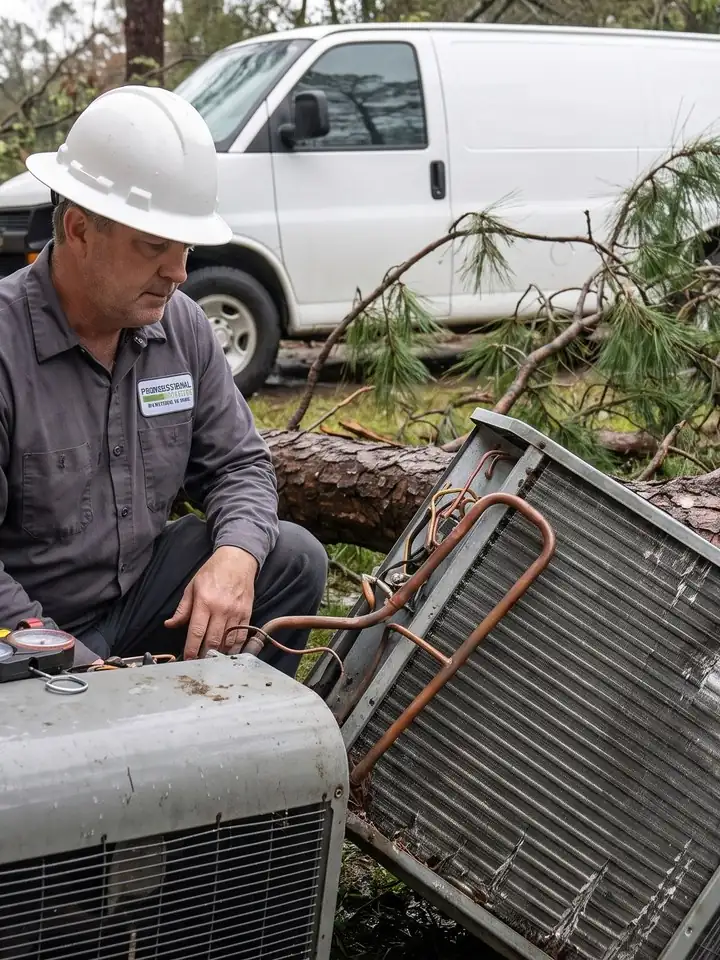
Wind and falling limbs roll units off the pad, which kinks line sets, strains the service whip and, if the unit ran on its side, risks the compressor. We reset, re-level, pressure-test the lines and check the compressor before it runs.
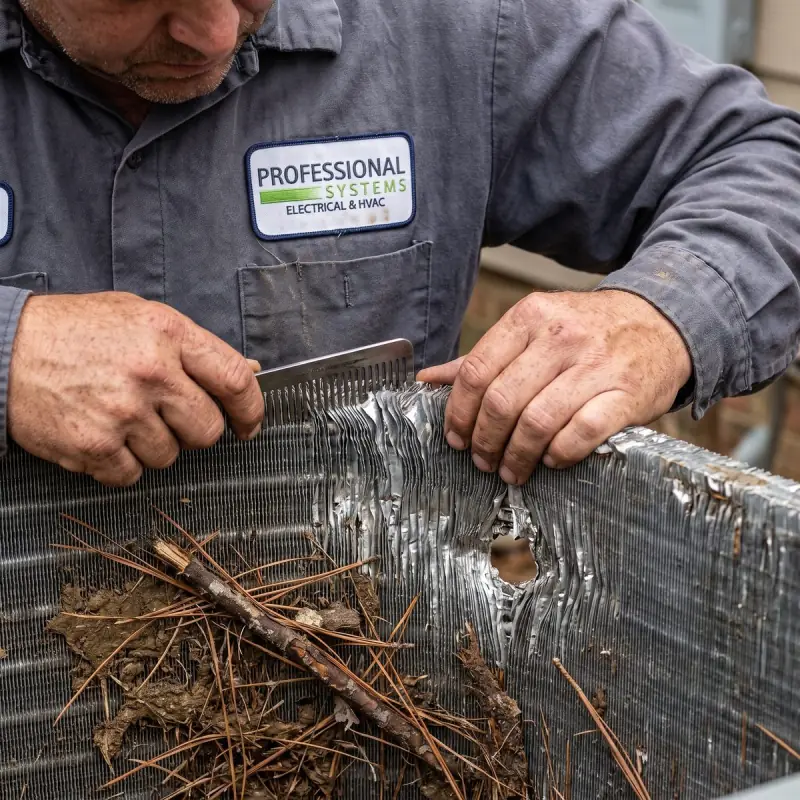
Shingles, gravel and branches flatten the fin pack and can pierce the coil. Flattened fins get combed open; a punctured coil is a repair that needs a leak check, a brazed patch or a coil replacement, and a recharge.
A line set torn loose by a shifted unit or a fallen fence section dumps the charge. We repair or replace the line set, pull a vacuum, weigh in the charge and verify the system is dry.
Rain blown sideways and standing water get into the electrical compartment. A contactor that has been under water sticks; a capacitor that got wet fails early. Both are replaced, not dried.
The flicker when the grid comes back is the moment boards die. We test the furnace or air-handler board, the condenser board and the compressor windings before declaring the system safe, and we install surge protection so the next restoration is not a repeat.
Tarped roofs still drip. Wet blower compartments, soaked filters, insulation on the coil and water in the ductwork are checked and corrected before the system circulates it through the house.
Tell us what happened to the outdoor unit, whether it has run since the storm, and whether anything is wet. A photo from your phone helps us bring the right parts.
A technician checks the condenser, the line set, the electrical compartment, the air handler and the drain, with a meter on the capacitor, contactor and compressor before any power goes to it.
You get a repair price and, when it makes sense to show it, a replacement price side by side, with our honest recommendation. No pressure either way.
Common parts are on the truck. Coils, line sets and new systems are ordered the same day, with a real lead time, not a hopeful one.
Photos of the damage, the cause as we found it, and an itemized invoice or estimate your adjuster can read.
A safe-to-run check, a written repair or replacement price, and the parts on the truck to finish most repairs the first visit.
Repair wins when the system is under about ten years old, the damage is mechanical and limited (a reset, a fin comb, a contactor, a capacitor, a line repair) and the compressor tests clean. Replacement wins when the unit was flooded or sat in saltwater, when the compressor is damaged on an older system, when the system still uses R-22 refrigerant and the coil is punctured, or when the repair price gets within reach of a new system's cost.
If it is a replacement, we size it for the house, not just match the old nameplate, and set the new condenser on an elevated stand with hurricane tie-downs where the lot floods or the wind exposure calls for it. That is the one upgrade that keeps you off this page after the next storm. Financing is available on replacements; ask when you call.
We will not sell a replacement when a repair is honest, and we will not patch a unit we know will fail in August. Both outcomes cost us a customer, and we have been in Mobile too long for that.
Before every storm we stock contactors, capacitors, fan motors, line-set material and refrigerant so most repairs are finished on the first visit. Replacements depend on distributor stock, which runs thin for a few weeks after a landfall; we tell you the real lead time and put a temporary fix in place where one is safe.
Pricing is written before the work starts and it does not change because it is storm season. No hourly surprises, no emergency surcharge for an honest storm call. If you are a maintenance-plan customer you are on the priority list; if you are not, call anyway and we will tell you where you stand.
A hurricane tie-down kit on an anchored pad is an hour's work and the reason the unit is still on the pad the morning after.
On the bay, the rivers and the island, an elevated stand above the flood line turns a replacement into a cleaning.
A surge protector at the condenser disconnect and one at the panel, so the restoration flicker does not take the board and the compressor.
Loose furniture, grills, planters and limbs over the unit become the debris that crushes the fins. Move them before the wind does.
A system with a clean coil, a tested capacitor and a clear drain goes into the season with margin. Maintenance-plan customers also get priority storm service.
"A storm came through and messed up the electric in our house. We got a quote quickly and they got us up and running fast! The guys did a great job and even helped us save money."
— Devan H., Google review"Came home late afternoon to find my power off. I called after hours and Robby was over in 15 min. It was a bad circuit breaker. From the time I saw I had no power til the time I had power back on was around 30 min. Amazing. Super nice guys as well."
— Gary S., Google review"They diagnosed a power issue that other companies weren't able to. The technician was extremely knowledgeable and professional, and explained everything very well. Also, I called them at 8 at night and got a human being on the phone!"
— Laura B., Google reviewNot until someone has looked at the outdoor unit. If it moved, is wet above the base, is packed with debris, or the house took a surge when power came back, running it can turn a small repair into a compressor. Leave it off and call for a safe-to-run check.
Usually not. A tipped condenser needs to be reset and leveled, the line set checked for kinks and leaks, the electrical compartment inspected and the compressor tested. If it never ran on its side, most come back fine. If it did, we test before we promise anything.
Pine straw, leaves and shingle grit block airflow through the coil, so the unit runs hot and the compressor works harder. Crushed fins do the same. We clean the coil, comb the fins open and check for punctures before the system goes back into service.
The most common causes after a storm are a tripped breaker or blown low-voltage fuse, a surge-damaged control board, a failed capacitor, or a flooded contactor. We diagnose it at the unit and give you a price before replacing anything.
Wind and falling-object damage is often covered under the dwelling portion of a homeowner policy, and flood damage usually is not unless you carry flood coverage. We cannot promise what your policy pays; we document the damage with photos and an itemized estimate so the claim is complete.
As soon as roads are passable, with maintenance-plan customers first. During an active event the notice bar on this site shows the current response time. A person answers the phone nights and weekends.
Turn the system off at the thermostat and the breaker, clear everything loose from around the unit, and leave it uncovered; a tarp becomes a sail and traps moisture. If you have time, a strap kit on the pad does more than any cover.
Something we didn't cover? See our full FAQ page or call (251) 680-7500.
What adjusters need from the contractor, and how we document storm damage for your claim.
Insurance documentationElectrical, HVAC and generator repair after a storm, from one Mobile crew.
Storm damage hubLicensed HVAC technicians repair storm-damaged condensers, coils, lines and boards across Mobile and Baldwin County, with an honest replacement call when that is the right answer.
Call (251) 680-7500 Request Storm Service