The adjuster needs three things from your HVAC and electrical contractor: photos taken before anything was cleaned up, a plain statement of what caused the damage, and an itemized written estimate. Professional Systems produces all three in the format Gulf Coast adjusters work from, for the electrical and air-conditioning part of your hurricane claim. No coverage promises, no games with your deductible, just the paperwork done right.
Call (251) 680-7500 Request Storm ServiceA hurricane claim is a cause-of-loss argument. Wind, falling trees and wind-driven rain are usually handled under the dwelling coverage of a homeowners policy, subject to a named-storm or hurricane deductible that on the Alabama coast is often a percentage of the dwelling value rather than a flat number. Rising water and storm surge are flood, which a standard policy excludes and a separate flood policy covers. A dead air conditioner or a scorched panel can fall on either side of that line, and which side it lands on depends on what the file says caused it.
That is why the contractor's documentation matters more than the contractor's opinion. A photo of the condenser on its side under a pine limb, with the date and the address, settles the wind question. A photo of the waterline on the panel settles the surge question. An estimate that lists the parts, the labor and the code-required upgrades separately gives the adjuster line items to approve instead of a lump sum to argue about.
Call (251) 680-7500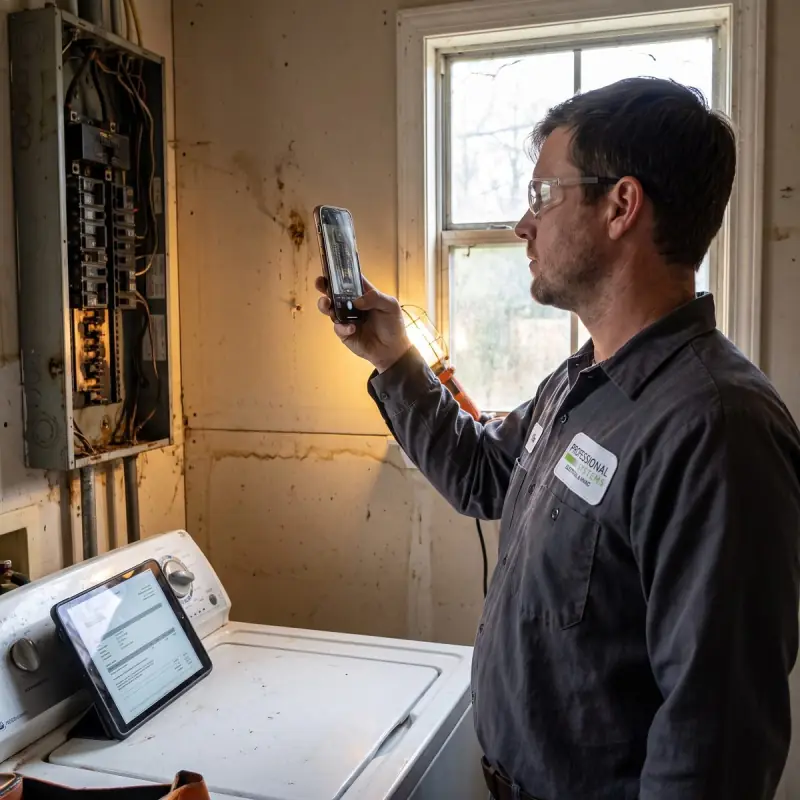
Dated photos of the damage as we found it, the waterline, the failed components and the completed repair, labeled by location.
A plain-English description of what we observed and what, in our professional judgment, caused it: wind, falling object, water intrusion, surge on restoration, or flood.
Parts, labor, permits and code-required upgrades on separate lines, with model numbers and quantities, in the format adjusters and their estimating software expect.
When equipment is a replacement rather than a repair, the reason in writing: submersion, saltwater exposure, compressor damage, manufacturer guidance.
Where we serviced the system before the storm, our records show it was working. Maintenance-plan customers have this on file automatically.
The final invoice mirrors the approved estimate line for line, with supplements documented separately when hidden damage turns up.
Mains off if anything got wet, the generator connected properly, tarps on the roof. Policies require you to prevent further damage, and the emergency costs are usually claimable; keep the receipts.
Your phone, wide and close, with the date on. Do not throw the old equipment away until the adjuster has seen it or has photos of the nameplate.
Call your carrier, get a claim number, and ask whether the loss is being handled as wind or flood. Tell us the number; it goes on every page we produce.
We inspect, document and write the itemized estimate. If a repair cannot wait for the adjuster, we document before and after and proceed with your approval.
We will walk the property with the adjuster on request and answer the technical questions on the spot; it shortens the back-and-forth.
Approved scope completed, invoice matched to the estimate, supplements for hidden damage documented with photos.
Dated photos, cause-of-loss notes and an itemized estimate for the electrical and HVAC damage, written the way adjusters read them.
We are a licensed electrical and HVAC contractor, not a public adjuster or a law firm. We do not negotiate your settlement, we do not tell you what your policy covers, and we do not inflate an estimate or absorb a deductible to win a job. All of that gets claims denied and contractors prosecuted, and it is why the adjusters who work the Gulf Coast trust our paperwork.
What we do is make the electrical and HVAC part of the file complete and honest, show up when the adjuster wants to see the damage, and do the repair to code so the next inspection and the next storm are not a problem. If the roof or the structure is part of the same claim, our sister company Professional Contracting handles the building side and the two estimates tell one story.
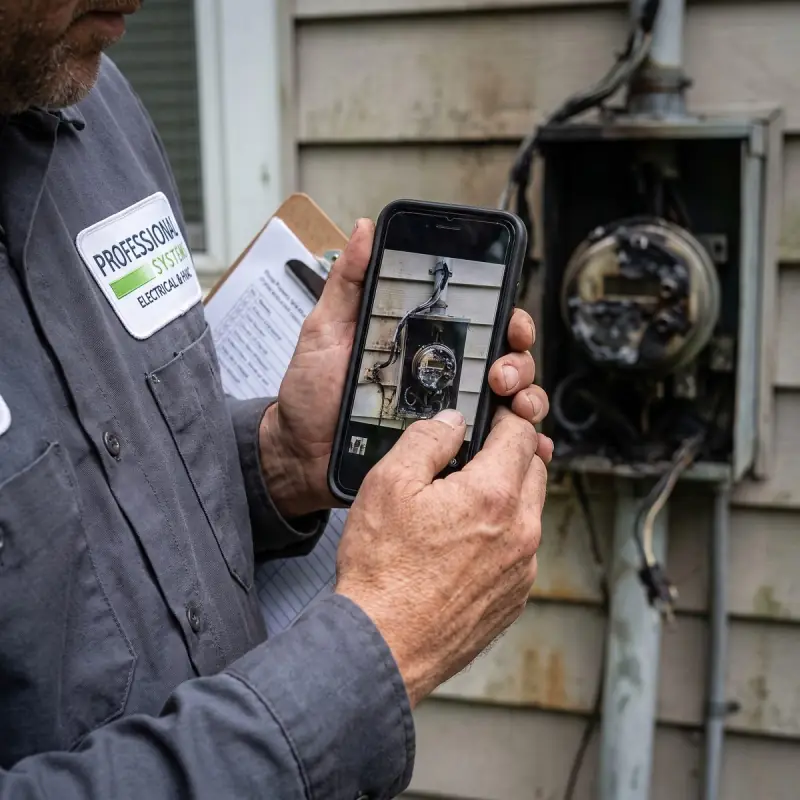
Service masts, weatherheads and meter bases pulled off by the drop; panels and devices below a surge waterline; condensers tipped or crushed by trees and debris; air handlers under a roof leak; compressors and control boards killed by the surge when power was restored; generators that failed; wiring to docks, sheds and pool equipment. Code-required upgrades that come with the repair, such as GFCI and AFCI protection or an elevated stand in a flood zone, are listed as their own line so the adjuster can apply the ordinance-or-law part of the policy where it exists.
Every one of those repairs is on this site with its own page, and every one comes with the documentation package. If you are not sure whether something is worth claiming, send us the photos; we will tell you what it is and what the repair runs before you decide.
"A storm came through and messed up the electric in our house. We got a quote quickly and they got us up and running fast! The guys did a great job and even helped us save money."
— Devan H., Google review"Came home late afternoon to find my power off. I called after hours and Robby was over in 15 min. It was a bad circuit breaker. From the time I saw I had no power til the time I had power back on was around 30 min. Amazing. Super nice guys as well."
— Gary S., Google review"They diagnosed a power issue that other companies weren't able to. The technician was extremely knowledgeable and professional, and explained everything very well. Also, I called them at 8 at night and got a human being on the phone!"
— Laura B., Google reviewWind and falling-object damage to the outdoor unit is commonly covered under the dwelling portion of a homeowners policy, subject to the hurricane or named-storm deductible. Flood and storm-surge damage usually falls under a separate flood policy. Every policy differs; we document the cause so the adjuster can apply yours.
Dated photos of the damage before cleanup, a plain statement of the cause as the contractor found it, and an itemized written estimate with parts, labor, permits and code upgrades on separate lines. That is the package we provide.
Make it safe and stop further damage right away; that is required by most policies. For the full repair, photograph everything first, get a claim number, and let us document before and after if the repair cannot wait. Keep the damaged equipment until the adjuster has seen it or photographed the nameplate.
We can make the electrical and HVAC part of the file complete and accurate, and we will meet the adjuster on site to answer technical questions. We are not public adjusters and we do not negotiate settlements or promise outcomes.
No. Waiving a deductible is insurance fraud, and inflated estimates get claims denied. We bill you for the approved scope, and the invoice matches the estimate line for line.
We provide the documentation for a supplement: photos, the manufacturer's replacement guidance, and the code requirements that drive the cost. Adjusters approve line items they can verify, which is why the estimate is itemized in the first place.
Something we didn't cover? See our full FAQ page or call (251) 680-7500.
Everything we repair after a storm, electrical and HVAC, with documentation.
Storm damage hubTipped condensers, crushed fins, broken lines and surge damage, repaired or replaced.
Storm AC repairWhy submerged electrical equipment is replaced, and how the new panel goes in higher.
Flooded panelsA written, photographed inspection before the power goes back on.
InspectionPhotos, cause-of-loss notes and itemized written estimates for the electrical and HVAC part of your hurricane claim, from a licensed Mobile contractor who also does the repair.
Call (251) 680-7500 Request Storm Service