A Gulf Coast house that took water has about 48 to 72 hours before mold starts, and the clock runs faster in September heat with the power out. Our indoor air quality team sets up drying, cleans and seals the ductwork the water reached, and installs the whole-home dehumidification and filtration that keeps the house healthy after the remediation crew leaves. Mobile and Baldwin County.
Call (251) 680-7500 Request Storm ServiceMold does not wait for the claim. Wet drywall, carpet pad, cabinet bases and the insulation around the air handler start growing within two to three days at Mobile humidity, and once it is in the ductwork the system spreads it to every room each time the blower runs. Policies require you to prevent further damage, so drying is not just allowed before the adjuster comes, it is expected; photograph everything first and keep the receipts.
Drying a house without power is the Gulf Coast problem. Opening the windows helps only when the outdoor air is drier than the inside, which in late summer is rarely before dawn. A generator running a dehumidifier and a few air movers does more in a day than open windows do in a week. We help you set that up, and we tell you when the AC can safely take over the job.
If you see downed lines, smell burning or hear buzzing, stay away, keep people and pets clear, and call 911 or the power company first. Then call us.
Call (251) 680-7500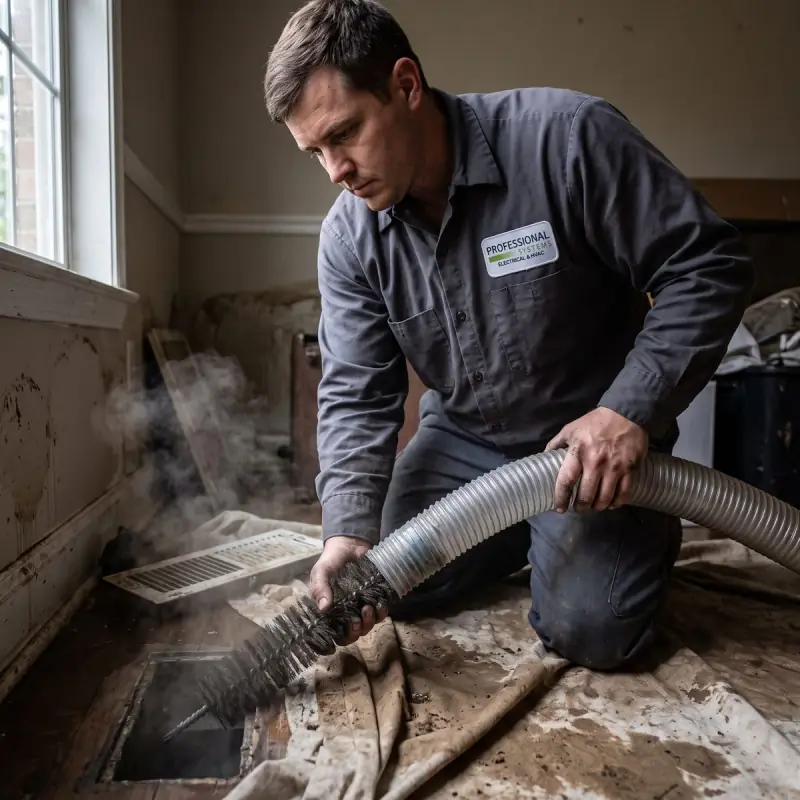
Humidity and moisture readings room by room and inside the duct system, so the drying plan targets what is actually wet instead of the whole house.
Commercial dehumidifiers and HEPA air scrubbers set up and sized for the space while the structure dries, run from utility or generator power.
Sheet-metal ducts the water reached are cleaned with rotary brushes and negative-air vacuum, then sanitized. Flex duct and duct board that got wet are replaced; they cannot be cleaned.
Joints that separated when ducts floated or were crushed are re-sealed, so the system is not pulling crawlspace air into the house for the next ten years.
A ducted dehumidifier on the air handler holds the house at 45 to 50 percent humidity year-round, which is what keeps mold from coming back after the drying is done.
Media filtration and a UV light at the coil for a system that has been through a flood, so what the blower moves is clean.
How much, where, whether the air handler and ducts got wet, and whether the house has power. We bring the right equipment.
Moisture readings, drying equipment placed and sized, and a plan for what runs on the generator if the power is out.
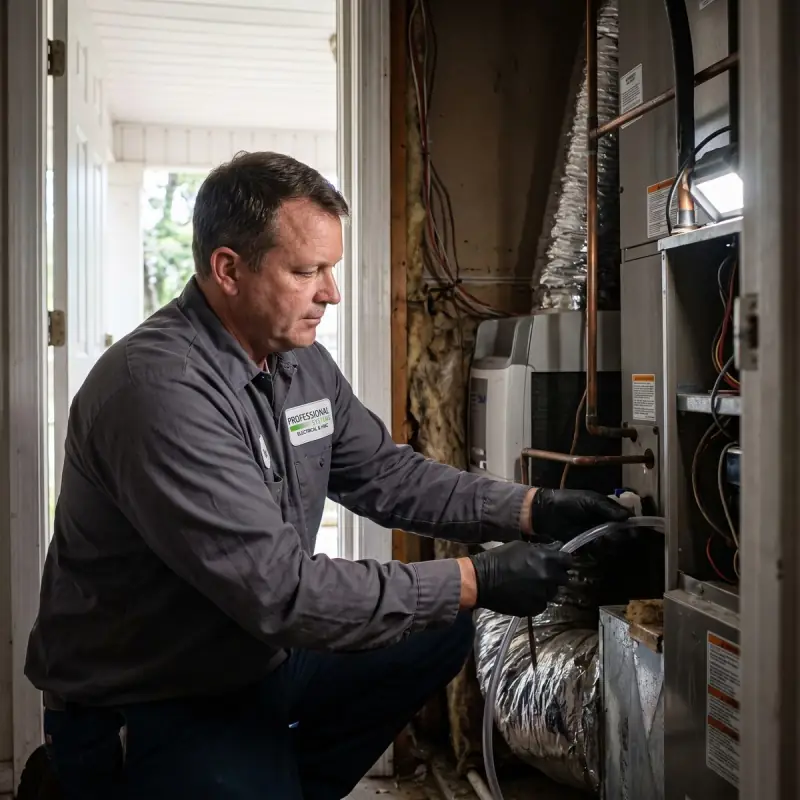
The air handler, coil and ducts inspected so the system is not spreading spores. A wet air handler is dried or replaced first.
Metal ducts cleaned and sanitized, wet flex duct and duct board replaced, joints sealed.
Whole-home dehumidifier, filtration and UV installed so the house holds at a safe humidity after the remediation crew leaves.
Drying equipment, a safe-to-run check on the AC, and duct cleaning where the water reached, coordinated with your remediation crew.
The air conditioner is the best dehumidifier in the house, which is why the instinct is to run it the moment power returns. If the air handler and the ducts stayed dry, do it: set it a few degrees lower than normal and let it pull moisture. If the air handler took water, or the ducts flooded, running it pushes wet, spore-laden air through every room and shorts the board on the way. That system gets inspected and dried, or replaced, before the thermostat is touched.
When in doubt, call. A technician can tell you in an hour whether the system is safe to run, and if it is not, temporary dehumidification carries the house until it is. The musty smell at the vents after a storm is not something a new filter fixes; it is the sign the ducts need cleaning.
A portable generator through a proper inlet runs a commercial dehumidifier and two air movers all day. That is the highest-value load in the house until the power returns.
Carpet pad, soaked drywall below the waterline, wet insulation and cardboard. Drying equipment cannot keep up with a room full of wet material.
Early morning on a dry day, yes; a humid afternoon, no. Opening the house to 80 percent outdoor humidity adds water to the walls.
If the air handler or ducts got wet, running the system spreads it. If they stayed dry, the AC becomes the best drying tool you own the moment power returns.
Dates, readings, what was removed and what was run. The claim needs it, and so does the remediation crew when they arrive.
Remediation companies dry the structure and leave. What they do not do is change the fact that a Mobile home sits in 70 to 80 percent outdoor humidity for eight months a year, with an air conditioner that often short-cycles and leaves the air damp. That is why mold comes back a year after the storm in houses that were dried properly.
A whole-home dehumidifier on the air handler, a sealed duct system and real filtration are the fix, and the weeks after a storm, when the walls are open and the ductwork is already being worked on, are the cheapest time to add them. We work alongside your remediation and rebuilding contractors so the drying, the HVAC repair and the air-quality work happen in the right order.
"A storm came through and messed up the electric in our house. We got a quote quickly and they got us up and running fast! The guys did a great job and even helped us save money."
— Devan H., Google review"Came home late afternoon to find my power off. I called after hours and Robby was over in 15 min. It was a bad circuit breaker. From the time I saw I had no power til the time I had power back on was around 30 min. Amazing. Super nice guys as well."
— Gary S., Google review"They diagnosed a power issue that other companies weren't able to. The technician was extremely knowledgeable and professional, and explained everything very well. Also, I called them at 8 at night and got a human being on the phone!"
— Laura B., Google reviewAt Gulf Coast humidity, about 48 to 72 hours on wet drywall, carpet pad and insulation, faster in summer heat with no power. Drying has to start before the adjuster comes; photograph everything first and keep receipts for the equipment and the fuel.
If the air handler and ducts stayed dry, yes; it is the best dehumidifier you own. If the air handler or ducts got wet, no, until they have been inspected and dried or replaced. Running a wet system spreads spores through the house and damages the equipment.
Sheet-metal ducts, yes: cleaned, sanitized and resealed. Flex duct and fiberglass duct board that got wet are replaced; the material holds the moisture and the growth.
Moisture in the ducts, the air handler or the coil, often with growth already started. A filter does not fix it. The system needs to be inspected and the ducts cleaned.
If the house was dried properly it is not required, but it is the single most effective way to keep mold from returning in a Mobile home that lives at 75 percent outdoor humidity. The weeks after a storm are the cheapest time to add one.
We handle the HVAC and air-quality side: drying equipment, duct cleaning and sealing, dehumidification, filtration and UV. Structural remediation and mold removal from walls and framing are done by remediation contractors, and we work alongside them.
Something we didn't cover? See our full FAQ page or call (251) 680-7500.
Everything we repair after a storm, electrical and HVAC.
Storm damage hubDehumidifiers, duct cleaning, filtration and UV for Gulf Coast homes.
Indoor air qualityWhether the system is safe to run before you turn it on.
HVAC inspectionMoisture assessment, drying equipment, duct cleaning and whole-home dehumidification from Mobile's indoor air quality team, working alongside your remediation crew.
Call (251) 680-7500 Request Storm Service